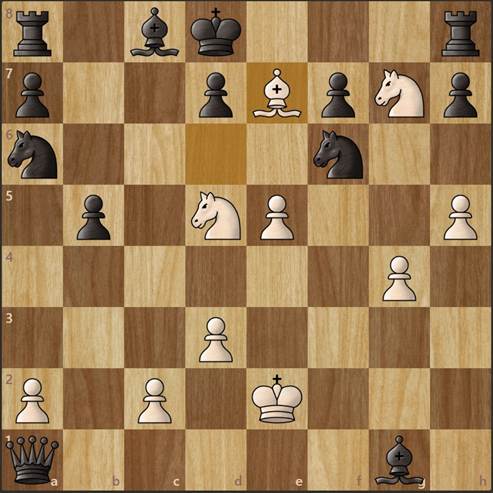
Anderssen (White) played a game that violated one of the cardinal rules of chess – preserving your assets. He quickly sacrificed his bishop, both rooks and finally his queen, ending the game down 21 points in materiel. In contrast, Kieseritzky (Black) lost only three pawns! But these shocking sacrifices came together in an elegant strategic victory.
This game was all attack on the part of White, and defensive for Black. At no point in the game did Black have a viable offensive opportunity. This is a classic example of the brilliant and exciting attack play of the Romantic era. As positional play became the norm, this style proved less effective.
The Immortal Game is a fantastic example of the unpredictable play of the mid-19th century. The Romantic era valued unconventional and inspired play. Many players relied on intuition as well as study. Players were exploring the full potential of chess strategy, both good and bad, and it made for some legendary results.
Modern chess has been changed by the ready availability of chess engines and endless computer analysis, leaving less room for innovative or intuitive play. In today’s classical chess the goal is often to “not lose” rather than to win. The Immortal Game became famous because of its daring and aggressive play.
Lesson: it would be valuable to remember that chess is a game. Approach your play creatively, even playfully. Even serious chess masters can find joy in trying something just to see how it works out. Fortune can favor the bold!